Temperament before age
Readiness has no universal birthday
There is no responsible one-year rule for every breed and individual. A candidate should be comfortable near water, able to settle on cue, responsive around distractions, and physically able to balance and swim. A dog that freezes, scrambles to escape or remains highly aroused is giving useful information: pause the plan.
Ask a veterinarian about puppies, older dogs, brachycephalic breeds and dogs with heart, joint, neurological or mobility concerns. Swimming ability varies, and confidence on land does not prove comfort after an unexpected fall.
A better success metric
The dog can step onto a stationary board voluntarily, remain relaxed while it moves slightly, respond to simple cues and step off without being chased or restrained.
Shared platform
Size for the combined load—not the paddler alone
Add the paddler, dog and all gear, then choose a board whose manufacturer lists that combined weight within its recommended performance range. A claimed maximum is not always the same as a comfortable paddler-and-gear range. Width, usable deck area, outline and stiffness matter alongside volume.
- Clear deck.Leave enough grippy, uncluttered space for the dog to turn and lie down without standing over straps or a fin box.
- Stable shape.A broad all-round outline is often easier than a narrow performance shape, but use the maker's intended-user guidance.
- Protected surface.A full deck pad improves traction. Keep nails smooth and use only a maker-approved protective mat if extra grip is needed.
Test the loaded board near shore before planning a route. If the deck sits poorly, flexes excessively or leaves little freeboard, choose a more suitable model.
Two paddlers, two systems
Fit the dog and human separately
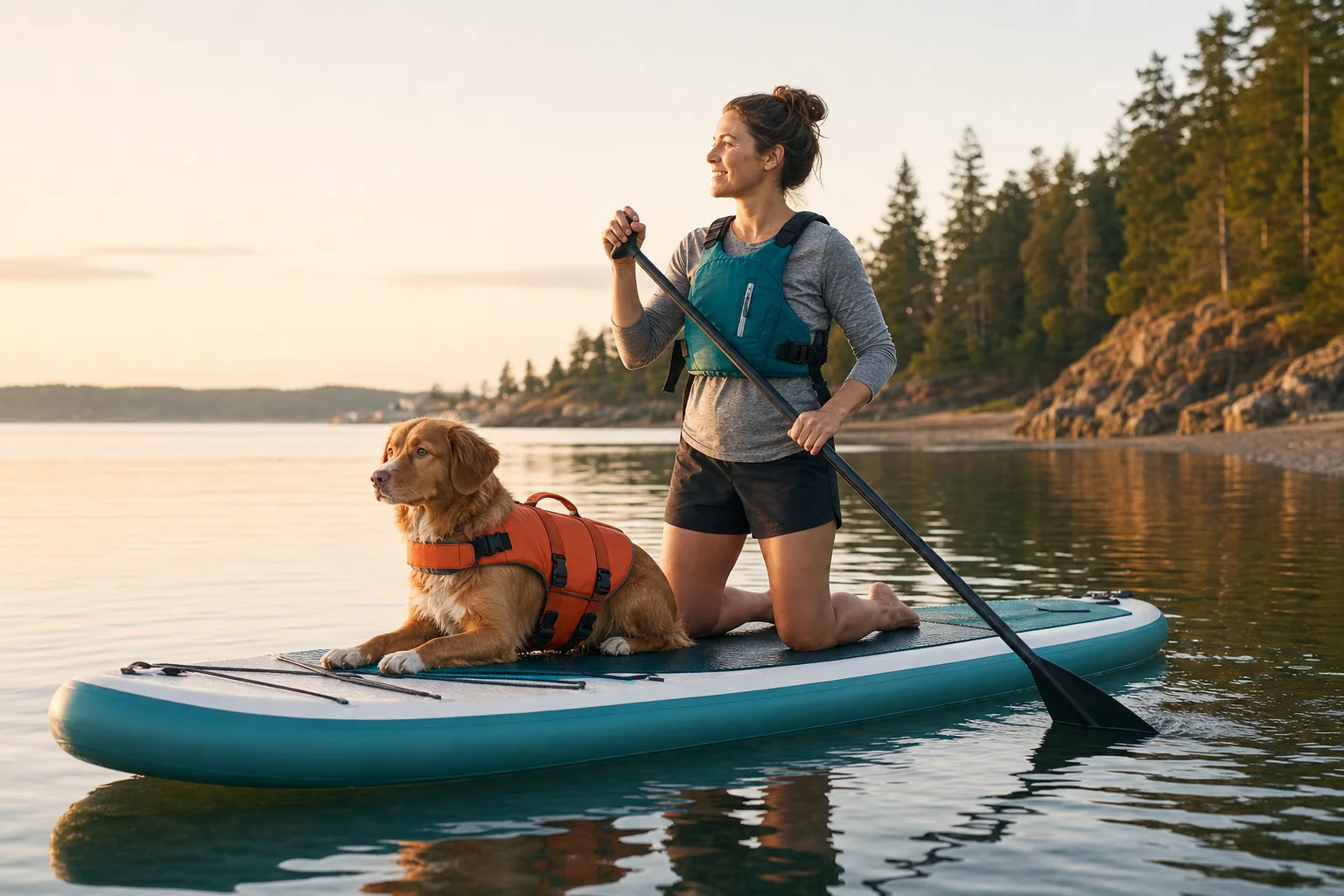
Use a canine flotation aid that fits the dog's chest and weight range, stays secure when wet, allows free breathing and movement, and includes a useful lifting handle. Acclimate the dog on land, then test the fit and swimming posture in controlled shallow water. A dog flotation aid does not replace the person's PFD.
The human also needs the correct board leash for the environment. Do not clip the dog to the board, the human or a loose deck line: a lead can tangle around legs, fittings or underwater hazards. Keep the shore lead controlled for access and local rules, then stow it without loops once aboard.
Carry fresh water, a collapsible bowl, waste bags, a towel and reachable communication. Shade is limited on open water, so shorten plans in heat and protect paws from hot surfaces.
Four quiet stages
Let confidence arrive in layers
- 01Make the board ordinary.
Place it on a stable, protected surface with the fin removed. Reward voluntary investigation, stepping on and settling; do not drag the dog aboard.
- 02Add tiny movement.
Rock the board gently by hand and practise a reliable position cue while the paddler kneels beside it.
- 03Move to controlled shallows.
With both flotation systems fitted, let the dog board and leave freely. Practise a calm exit and the route back to the center of the deck.
- 04Take a kneeling shoreline lap.
Choose sheltered water, stay close enough to land immediately, and stand only when dog and paddler remain relaxed.
Keep the day small
The dog's behavior is the turn-around signal
Watch for persistent panting unrelated to exercise, trembling, repeated repositioning, tucked posture, fixation on shore or attempts to jump. Land before stress or fatigue makes decisions for you. Rinse salt, algae or contaminated water from coat and equipment, and do not let a dog drink from unknown water.
Avoid boat traffic, strong wind, current, surf, cold water and long crossings. The added passenger changes balance and remounting; practise recovery without the dog first and never assume the dog will remain on the board after you fall.
Human safety still leads
Wear your PFD, carry help on your person, use the leash appropriate to the water and share the plan ashore. If managing the dog prevents you from doing those things, the outing is not ready.
Primary references
Check the guidance behind the guide
Conditions, regulations, and product instructions can change. These primary resources support the safety-sensitive and technical points above; always check the latest local information before launching.
Clear answers
Frequently asked questions
01How old should a dog be before paddleboarding?
There is no universal minimum age. Readiness depends on development, health, swimming comfort, temperament and training. Ask your veterinarian about puppies, older dogs or any medical concern.
02Do small dogs need a PFD?
Yes. Size does not guarantee swimming endurance or a safe posture after a surprise fall. Use a canine flotation aid fitted to the dog's weight and chest, and test it in controlled water.
03Should I attach my dog's lead to the board?
No. Tethering the dog to the board, paddler or loose deck line can create entanglement. Control the dog at the launch as local rules require, then stow the lead without loose loops.
04What should I do if my dog falls in?
Stay calm, lower yourself, control the board and guide the dog toward the side or tail. Use the PFD handle for a controlled assist only as its maker intends; avoid hauling by the collar.
05How long should the first dog session be?
Only long enough to preserve relaxed behavior—often a very short shoreline lap. Temperature, excitement and balance work can tire a dog quickly, so land at the first signs of stress or fatigue.
06What if my dog does not enjoy the board?
Stop. Return to short, reward-based land sessions or choose a different shared activity. Paddleboarding is optional, and forcing it makes both dog and paddler less safe.