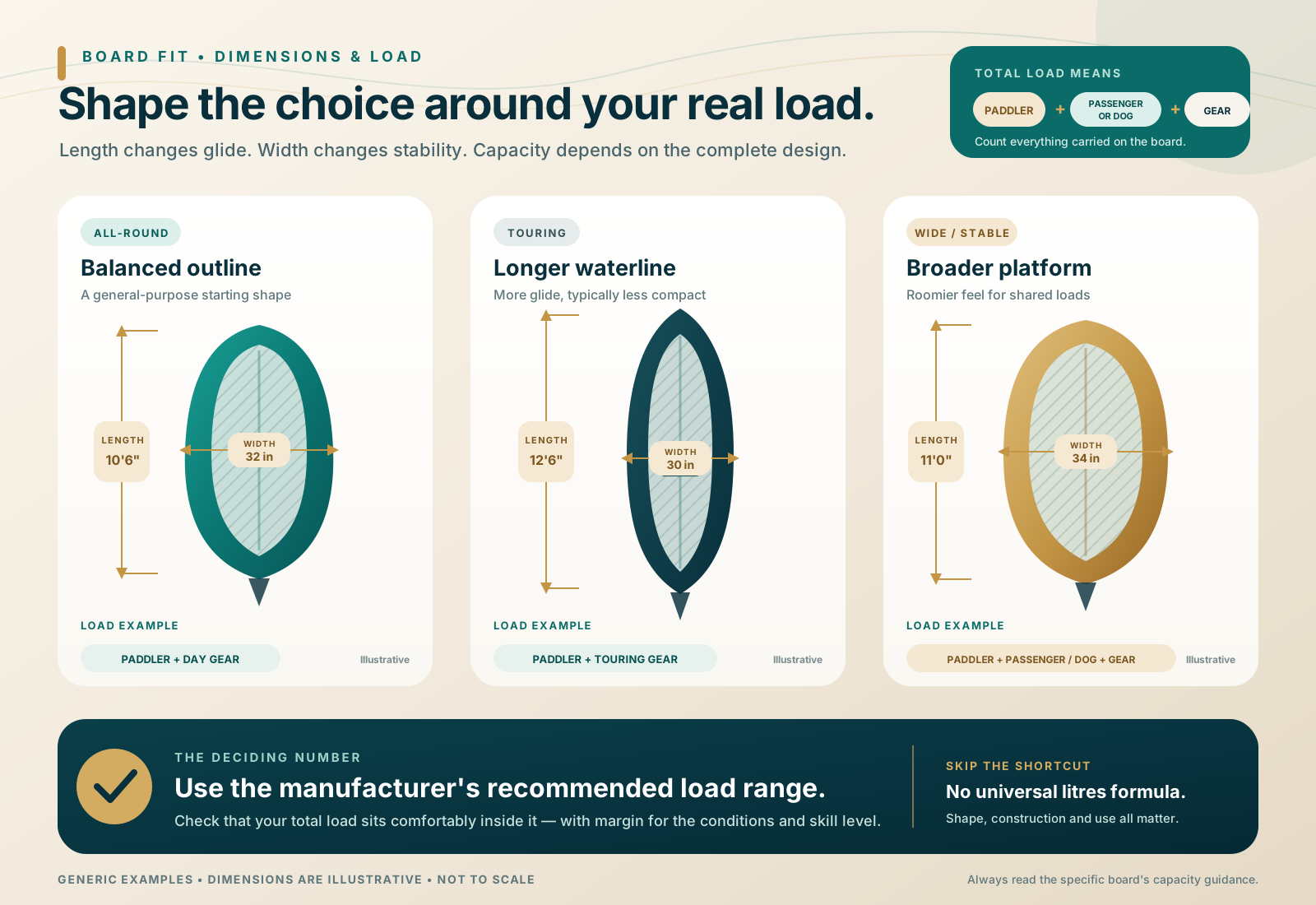
Remove the false precision
There is no universal liters-per-pound answer
Volume describes displacement, but it does not tell you where that volume sits, how stiff the platform is or how the rails and outline behave. A blanket formula such as body weight multiplied by 1.4 or 1.5 can produce a precise-looking number without identifying a suitable board.
Instead, total the paddler, clothing, water, bags, passenger, dog and other gear. Look for the maker's recommended or suggested paddler-and-gear range for the exact model. If only a maximum capacity is published, ask whether it represents acceptable performance or merely an upper flotation limit.
A real-world example
NRS lists its STAR Photon with a “suggested weight range, paddler and gear, for best performance” of 100–250 lb. That language is more useful than deriving a universal answer from the board's 316-liter volume.
Read the complete outline
Length, width and thickness do different jobs
Length
Longer waterlines often favor glide and load-carrying; shorter boards can turn and store more easily. Nose and tail shape modify both.
Width
More width often adds initial stability, but where the width is carried matters. Excess width can make a vertical stroke harder and add drag.
Thickness & build
Thickness contributes volume and freeboard, while construction and pressure determine stiffness. Thicker is not automatically better.
Published dimensions are filters, not a test ride. Compare boards intended for the same use and construction class before treating one number as the deciding feature.
Stability has more than one face
Choose enough platform—not the widest platform
A beginner usually benefits from an all-round board that remains composed during a neutral stance and remount. Yet the widest option can be awkward for a smaller paddler to reach around, and a wide nose with a narrow tail behaves differently from parallel rails.
- Flat-water recreation.Prioritize easy stance, straightforward tracking and a deck that matches the intended load.
- Touring.Balance glide and tracking with enough stability for the route, fatigue and carried kit.
- Dog or passenger.Require both combined-load approval and usable deck space; neither volume nor width alone guarantees it.
Labels that sound alike
Maximum capacity is not always best-performance range
A maximum weight can mean the upper load before freeboard or handling becomes unacceptable under a manufacturer's test. A suggested paddler range may target better everyday performance. Those are not interchangeable, and there is no universal rule to stay exactly 15 or 20 percent below every stated maximum.
| Published figure | What to ask | Decision value |
|---|---|---|
| Paddler-and-gear range | Does it include clothing, water, dog and cargo? | Best first filter when defined for performance |
| Maximum capacity | Is this a performance recommendation or upper structural/flotation limit? | Do not infer comfortable handling without context |
| Volume | How are outline, rails and thickness arranged? | Useful for comparing similar designs, not as a lone answer |
Decision sequence
A board fit you can defend
- 01Total the real load.
Include every person, animal and item that will be aboard.
- 02Filter by intended use.
All-round, touring, surf and river shapes solve different problems.
- 03Stay inside the maker's performance range.
Clarify ambiguous “max weight” labels with the brand or retailer.
- 04Compare complete geometry.
Use width, length, outline, thickness and construction together.
- 05Demo the loaded board.
Check stance, tracking, turning and remounting in suitable calm water before committing.
Primary references
Check the guidance behind the guide
Conditions, regulations, and product instructions can change. These primary resources support the safety-sensitive and technical points above; always check the latest local information before launching.
Clear answers
Frequently asked questions
01Can I calculate board volume from my body weight?
Volume formulas can be rough comparison tools within similar designs, but they are not a universal sizing method. Begin with the exact model's recommended paddler-and-gear range.
02What weight should I include when sizing?
Include the paddler, clothing, water, dry bag, accessories, passenger, dog and any other cargo that will be on the board.
03Is maximum capacity the same as recommended load?
Not necessarily. A maximum may describe an upper limit rather than the range that handles best. Look for a defined performance range or ask the manufacturer what the number means.
04Does a wider board always feel more stable?
Often it adds initial stability, but outline, rail shape, thickness, stiffness and where the width sits also matter. Excess width can make an efficient vertical stroke harder.
05Should I buy a much larger board to be safe?
Not automatically. Oversizing can add weight, windage and awkward reach. Choose enough performance range and stability for the real load and use, then test the board if possible.
06Will more volume make a board faster?
No. Speed and glide depend on waterline, outline, rocker, stiffness, surface and technique. Extra volume can carry load, but it does not guarantee speed.