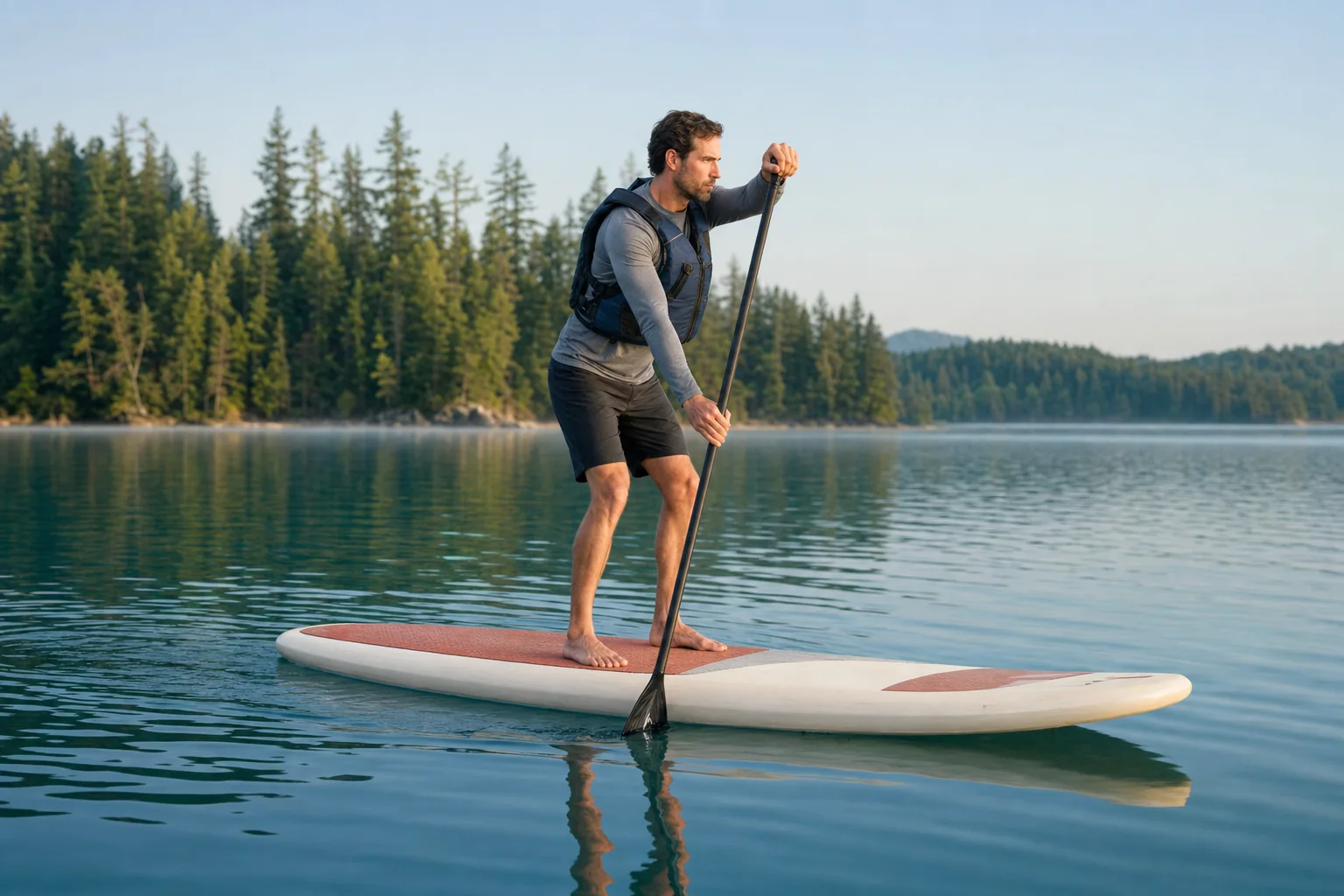
Skill 01
Launch low, then stand in stages
Choose calm, obstruction-free water deep enough that the fin and a fall will not meet the bottom. Fit your PFD and environment-appropriate leash before carrying the board in. Keep the fin clear, place the paddle across the deck and climb onto your knees around the carry handle.
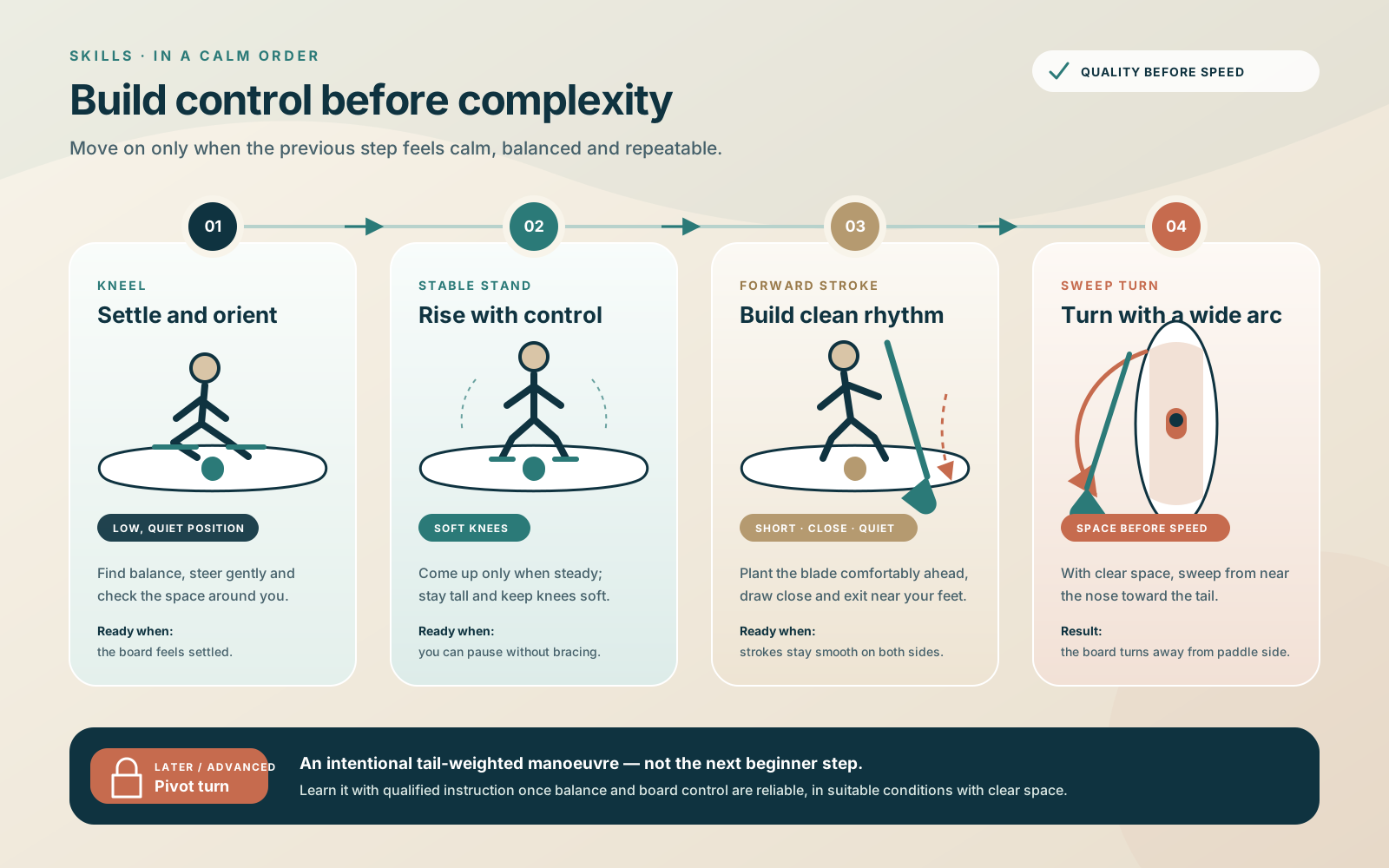
- 01Paddle kneeling first.
Move away from the launch, stop and turn while the center of gravity is low.
- 02Hands down, one foot at a time.
Place each foot where the knee was, keeping weight centered rather than stepping toward the tail.
- 03Raise the chest gradually.
Look ahead, keep knees soft and bring the paddle into the water as the board settles.
Skill 02
Make one clean forward stroke
Reach comfortably and place the entire blade beside the rail. Connect the top and lower hands through a quiet torso rotation, move the board past the planted blade, then release around the feet. Recovery happens above the water with the blade feathered forward.
Avoid reaching until the shoulders collapse or pulling the blade behind the body. Both add effort without improving the useful part of the stroke.
Skill 03
Let the board move beneath you
Use parallel feet around the center, a soft ankle-knee-hip chain and a relaxed grip. Practise very small shifts from foot to foot while the paddle rests in the water. Then return to neutral without staring down.
Progression, not performance
Move from kneeling to standing and back down on purpose. That controlled reset is a core skill, not a sign that the session has failed.
Cross-step, tail weighting and pivot turns belong later, after a paddler can stop, sweep-turn, fall clear and remount reliably. They are not required for a successful first session.
Skill 04
Learn stop, reverse and sweep
Stop
Plant the blade gently behind the feet and resist forward movement without wrenching the shoulder.
Reverse
Use a controlled stroke from behind toward the front to slow, back up or begin a turn.
Sweep
Draw a wide arc from nose toward tail. A forward sweep turns the board away from the paddle side.
Practise both sides around a visible point, well clear of people and obstructions. Add a simple combination—two forward strokes, stop, sweep, return—until the board goes where you intend.
Skill 05
Fall and remount while everything is easy
In controlled water, step or fall clear of the board and paddle rather than trying to land on the deck. Surface, orient, return to the center and keep the board between you and any nearby hazard. Approach from the side, bring the legs toward the surface, kick and slide the chest onto the deck before turning aboard.
Repeat from both sides, then recover the paddle and return to kneeling. Cold water, wind and fatigue make every stage harder, so dress for immersion and stop before the practice becomes a rescue problem.
A qualified lesson is the fastest way to adapt these movements to local water and individual mobility.
Primary references
Check the guidance behind the guide
Conditions, regulations, and product instructions can change. These primary resources support the safety-sensitive and technical points above; always check the latest local information before launching.
Clear answers
Frequently asked questions
01What should I learn first on a paddleboard?
Learn to launch and move on your knees, stand around the center, make a clean forward stroke, stop, sweep-turn, fall clear and remount. Keep all of it close to a safe shore.
02Where should my feet be when I stand?
Begin roughly hip-width apart around the carry handle, with toes forward and knees soft. Exact spacing varies by board and body; the nose and tail should sit without obvious loading.
03Where should the forward stroke end?
Release the blade around your feet. Pulling far behind the body tends to steer, lift water and add shoulder load rather than useful drive.
04Why does the board turn while I paddle forward?
Some yaw is normal. Keep the shaft more vertical, plant close to the rail, make a clean exit and switch sides before the heading drifts too far.
05Should I learn a pivot turn on day one?
No. Start with stop, reverse and sweep strokes while centered. Tail-weighted pivot turns add instability and can wait until basic control and recovery are reliable.
06Is a lesson worth it?
Yes, especially where tide, current, cold water or busy access complicates the venue. A qualified instructor can correct fit and movement while teaching local hazards and recovery.