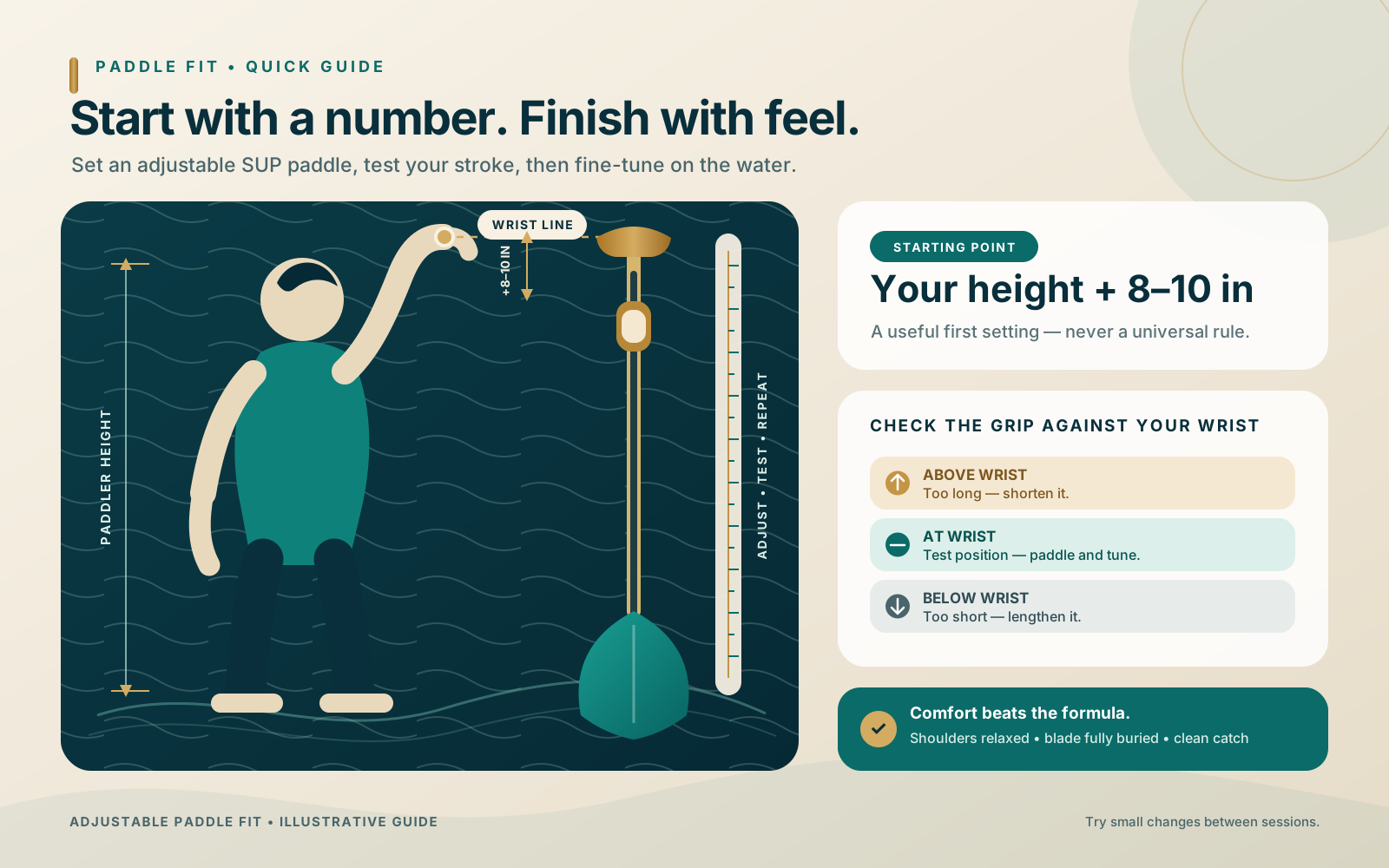
A useful first setting
Begin adjustable and stay approximate
For relaxed all-round paddling, many setup guides begin with a paddle modestly taller than the paddler—often somewhere around 6–10 in / 15–25 cm above standing height. Treat that as a broad workshop range, not a universal formula. Board thickness, stance, mobility, blade and discipline all move the answer.
Set an adjustable paddle near the middle of a plausible range. The goal is not to hit a number once; it is to leave enough adjustment in both directions for an honest water test.
Why advice varies
Surfing, sprinting, distance, touring and whitewater use different stance and stroke patterns. Starboard's own guidance changes paddle height by discipline—evidence that one “height plus eight inches” rule cannot fit everyone.
The corrected wrist check
Above the wrist means too long
Stand tall in normal footwear, place the paddle upright and raise one arm comfortably—not by hiking the shoulder. Use the wrist crease as an initial reference for the top grip.
Grip above wrist
The paddle is long for this check. Shorten it before testing on the water.
Grip at wrist
You have a neutral starting point, not proof of the final fit.
Grip below wrist
The paddle is short for this check. Lengthen it before testing.
The on-water result still outranks the static test.
What the body reports
Too long shrugs; too short folds
A paddle that is too long can make the upper shoulder rise, move the catch away from the rail and make frequent side changes awkward. A paddle that is too short can demand excessive hip or back flexion and make it difficult to bury the blade without collapsing the stance.
Length is only one variable. A large blade, stiff shaft or poor grip technique can create fatigue even at a sensible setting. Pain is not a fitting tool: stop, recover and seek qualified coaching or clinical advice if discomfort persists.
Discipline changes posture
Tune to the work the paddle will do
| Use | Typical tendency | Reason to test |
|---|---|---|
| Relaxed all-round | Moderately above head height | Comfort across kneeling, standing and easy touring |
| Distance / racing | Varies by cadence, board and technique | A longer reach is not useful if it compromises the catch or shoulders |
| Surf / dynamic water | Often shorter | A lower stance and rapid side changes reward clearance |
| Whitewater | Specialist setup | Technique, board and environment call for qualified local guidance |
These are tendencies, not cut lengths. Use the paddle maker's chart and coaching for the specific discipline.
The water test
Adjust first; cut only when the answer repeats
On calm water, paddle several minutes at the first setting. The shaft should become close to vertical at the power phase, the blade should bury without a shoulder shrug, and the stroke should release cleanly near the feet. Change the length in small increments, repeat on both sides, and note the setting.
- Choose adjustablefor a first paddle, shared equipment, travel or changing disciplines. Check the clamp remains secure and inside its marked range.
- Choose fixedwhen one paddler and discipline have produced a repeatable setting and the lighter, simpler shaft justifies losing flexibility.
- Before cuttingmeasure the manufacturer's method twice and account for the handle's insertion depth. A cut shaft does not grow back.
Primary references
Check the guidance behind the guide
Conditions, regulations, and product instructions can change. These primary resources support the safety-sensitive and technical points above; always check the latest local information before launching.
Clear answers
Frequently asked questions
01How much taller than me should a SUP paddle be?
For all-round paddling, 6–10 in / 15–25 cm above height is a broad starting range, not a rule. Use the paddle maker's guide and tune an adjustable shaft on the water.
02What does the wrist-height test mean?
With the paddle upright and arm raised comfortably, the grip should begin near the wrist crease. A grip above the wrist suggests shortening; below the wrist suggests lengthening.
03How can I tell that my paddle is too long?
Clues include a shrugged upper shoulder, awkward side changes and a catch that sits too far from the rail. Shorten in small steps and retest without forcing the stroke.
04How can I tell that it is too short?
Excessive bending, difficulty burying the blade and a cramped reach are common clues. Lengthen slightly, then retest with relaxed shoulders and soft knees.
05Do racing and surf paddles use the same length?
Not necessarily. Stance, cadence, board and technique differ by discipline. Use discipline-specific maker guidance and coaching rather than transferring one number.
06Should a beginner buy a fixed paddle?
An adjustable model is usually more forgiving while technique and preferred disciplines develop. Consider fixed only after a setting repeats comfortably across real sessions.