The bench answer
Flotation, board retention and rescue are separate jobs
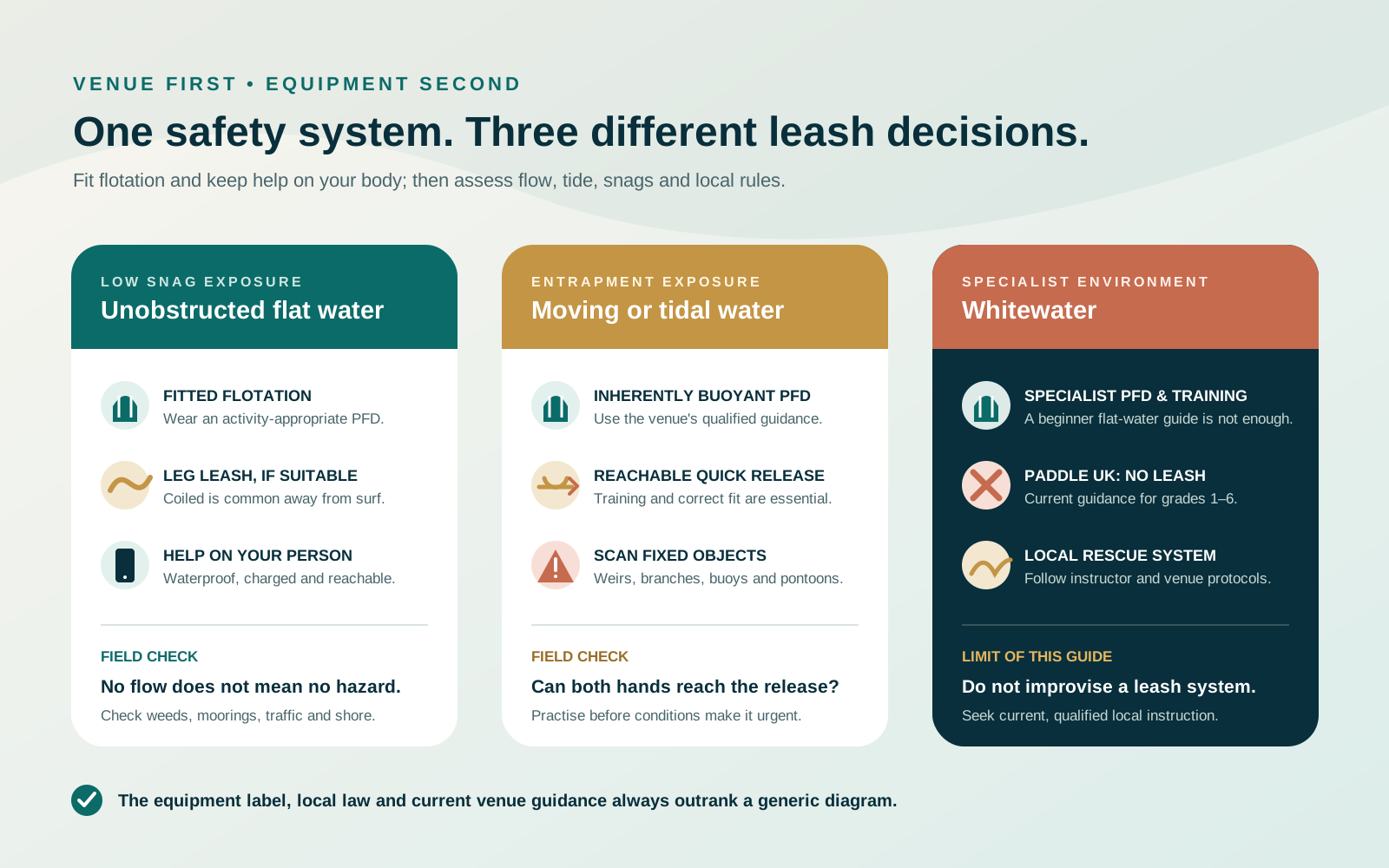
Wear an activity-appropriate PFD or buoyancy aid that fits, is serviceable and meets the approval required where you paddle. Then decide whether—and how—to tether to the board by assessing current, tide, surf, weeds, fixed objects and local guidance. Finally, keep a waterproof means of calling for help on your body. A phone inside a dry bag tied to a drifting board is not reachable when you need it.
The board is valuable flotation when retained, but it is not a substitute for fitted personal flotation. The leash can help keep board and paddler together in an appropriate environment, but a leash that wraps an obstruction in moving water can load the paddler dangerously. No single product solves both problems in every venue.
Use a three-question order
What flotation does local law and this activity require? What can the leash catch here? Can I call for help if separated from the board? Answer those before deciding that a package supplied with the board is complete.
This guide covers beginner flat water and the decision boundary around more complex water. It is not whitewater, surf-rescue or swiftwater training. When flow, surf or remoteness raises consequence, use qualified local instruction and the current rules of the venue.
Personal flotation
Choose approval first, then fit and function
Names vary by country—life jacket, buoyancy aid and PFD can describe equipment with different performance. Read the approval label rather than shopping by silhouette. Match the device to the wearer's weight or chest range, water type, activity and local regulation. A competition impact vest or swim aid is not automatically an approved paddling PFD.
Foam flotation
Provides buoyancy without deployment. A paddling cut should allow the shoulders to move and leave enough room to remount without the jacket riding up.
Inflatable flotation
Can be compact but may require deliberate activation, maintenance and user eligibility. Read approval-label restrictions; it is not the default answer for every swimmer, child or environment.
Specialist environments
Moving water, exposed coast and whitewater may require inherently buoyant, environment-specific equipment and rescue features selected through training.
Fasten every buckle and adjustment, then pull upward at the shoulders. A foam PFD should remain snug rather than sliding over the chin or ears. Move both arms through a full paddle stroke, kneel, lie prone and rehearse a remount in controlled water. Good shore fit is not complete until it works with the board.
Inspect fabric, webbing, buckles, flotation and approval marking before use. Maintain and test the device exactly as its maker directs. The US Coast Guard notes that foam devices should be checked for wear and buoyancy and that inflatable models need manufacturer-specified maintenance.
Board retention
The shoreline decides the leash—not the sales bundle
| Environment | Typical decision | Why it changes |
|---|---|---|
| Unobstructed lake, canal or calm coastal bay | A suitable ankle or calf leash is commonly used; coiled styles keep line off the deck and water. | Low flow reduces loading, but weeds, moorings, traffic and structures still need assessment. |
| SUP surf | A discipline-specific straight leash is common, sized and used under current surf guidance. | Coils can behave poorly in surf; the board can recoil and must be kept away from other people. |
| Moving or tidal water | Seek local training. RNLI and Paddle UK point to a correctly fitted, reachable quick-release waist system where tethering is appropriate. | Current can load a leg leash around a branch, buoy, pontoon, bridge support or other obstruction. |
| Whitewater | Specialist rules apply. Paddle UK's current grades 1–6 guidance is no leash. | Its testing found some body-worn quick-release systems did not release as expected under test conditions. |
Guidance is not identical in every country or discipline. The American Canoe Association's SUP resource describes a reachable waist-mounted quick release for an informed moving-water decision, while Paddle UK now makes a specific no-leash recommendation for whitewater grades 1–6. This is why one leg-leash rule cannot cover every venue and why whitewater belongs with current, qualified local instruction.
Do not improvise
Paddle UK warns that DIY leashes, modified quick releases and equipment repurposed from other sports can compromise the original safety design. Use compatible, correctly sized equipment as the maker intended.
Make the equipment usable
A release you cannot find is not a release plan
Check the leash cord, coil, swivels, cuff stitching, hook-and-loop closure, quick-release mechanism, rail saver and the board's attachment point. Replace parts showing cuts, hard kinks, corrosion, pulled stitching or unreliable closure. Connect only to the leash plug or attachment point identified by the board maker; deck bungees and carry handles are not automatic substitutes.
- 01Fit the PFD completely.
Secure every closure, check upward movement and confirm the device does not block the chosen waist release or communication pocket.
- 02Locate the release with either hand.
For a trained waist system, practise the maker's release action on land with eyes away from the buckle. Refit it correctly every time.
- 03Rehearse in controlled water.
Practise falling clear, maintaining board awareness and remounting while wearing the complete kit. Do not create current load merely to test a release.
- 04Protect communication.
Attach the waterproof device to the person where either hand can reach it. Know the local emergency number and the position information you can give.
A waist leash must be the correct size and position for that wearer and compatible with the PFD. Paddle UK's research found fit affected release performance, yet problems remained in whitewater testing. Equipment practice improves familiarity; it does not cancel the limits of the system or change current governing-body guidance.
The sixty-second audit
Make one go or no-go decision for the whole system
- Approval and lawConfirm the PFD and carriage or wear requirements for the exact water, age and activity. In the US, federal SUP rules may apply outside swimming, surfing or bathing areas; state and local rules can add requirements.
- Fit and conditionWear the PFD, close it, inspect it and verify the remount. Inspect the complete leash path and the board's attachment point.
- EnvironmentLook again for current, tide, surf, wind, weeds, weirs, branches, buoys, pontoons, traffic and cold water. Change or remove the leash only under the appropriate current guidance.
- Human backupCarry communication on the person, share the route and return time, paddle with capable company and remain close to a usable shore.
Turn back when the water does not match the equipment or skill. A quick-release belt does not turn moving water into a beginner venue. A legal PFD does not make cold exposure harmless. A leash does not replace route planning, and the board cannot call for help.
For a first session, the clearest system is sheltered, obstruction-free water; correctly fitted flotation; a suitable leash decision for that water; immersion clothing; a reachable phone or other approved calling device; and enough energy to remount. Build complexity only with training.
Safety equipment works best when every item has one clear job—and the paddler knows its limit.
Primary references
Check the guidance behind the guide
Conditions, regulations, and product instructions can change. These primary resources support the safety-sensitive and technical points above; always check the latest local information before launching.
Clear answers
Frequently asked questions
01Do I need both a PFD and a paddle board leash?
Wear flotation suited to the activity and local rules. A suitable leash may help retain the board, but the leash decision depends on flow, tide, surf and snag risk; one item does not replace the other.
02Can I use the same coiled leg leash on every type of water?
No. It is common on unobstructed flat water, but moving or tidal water can load a leg leash around fixed objects. Seek current local guidance and training; Paddle UK recommends no leash on whitewater grades 1–6.
03Can a beginner use an inflatable belt PFD?
Only when its approval label, local law, wearer eligibility, swimming ability and environment make it suitable. It may require activation and maintenance; a fitted foam paddling PFD provides immediate buoyancy.
04How tight should a paddleboarding PFD be?
Fasten every closure and adjust it snugly so an upward pull does not lift it over the chin or ears. Confirm free paddle movement and practise remounting while wearing it.
05Where should I keep my phone while paddleboarding?
In a suitable waterproof pouch attached to your person and reachable with either hand—not only in a dry bag fixed to the board. Keep it charged and know the local emergency procedure.