The quick answer
Find the model's number before adding air
There is no safe universal pressure for every inflatable stand-up paddleboard. Construction, thickness, seams, valve and reinforcement differ. Find the operating or maximum pressure printed beside the valve, in the owner's manual or on the maker's current support page. If the board and an old online listing disagree, stop and ask the manufacturer or an authorized service centre to identify the model.
Use a pump, hose and adapter intended for that valve and pressure range. A high-volume stage moves the first air efficiently; a high-pressure stage makes the last strokes manageable. NRS specifically warns against using a high-pressure air compressor on its SUPs. A compressor without the correct regulation can add pressure too quickly, heat the air and exceed the board's limit before the paddler reacts.
The useful rule
Do not inflate by feel. A board can feel firm across a broad range. The pressure gauge—not thumb pressure, bounce or the sound of the skin—is the control instrument.
Before setup, check the board, pump and fin as one system. Stop if you see an opening seam, a structural bulge, fabric separation, a damaged valve surround or a fin box pulling away from the board. Inflation is not a test that should be continued through obvious structural damage.
The controlled sequence
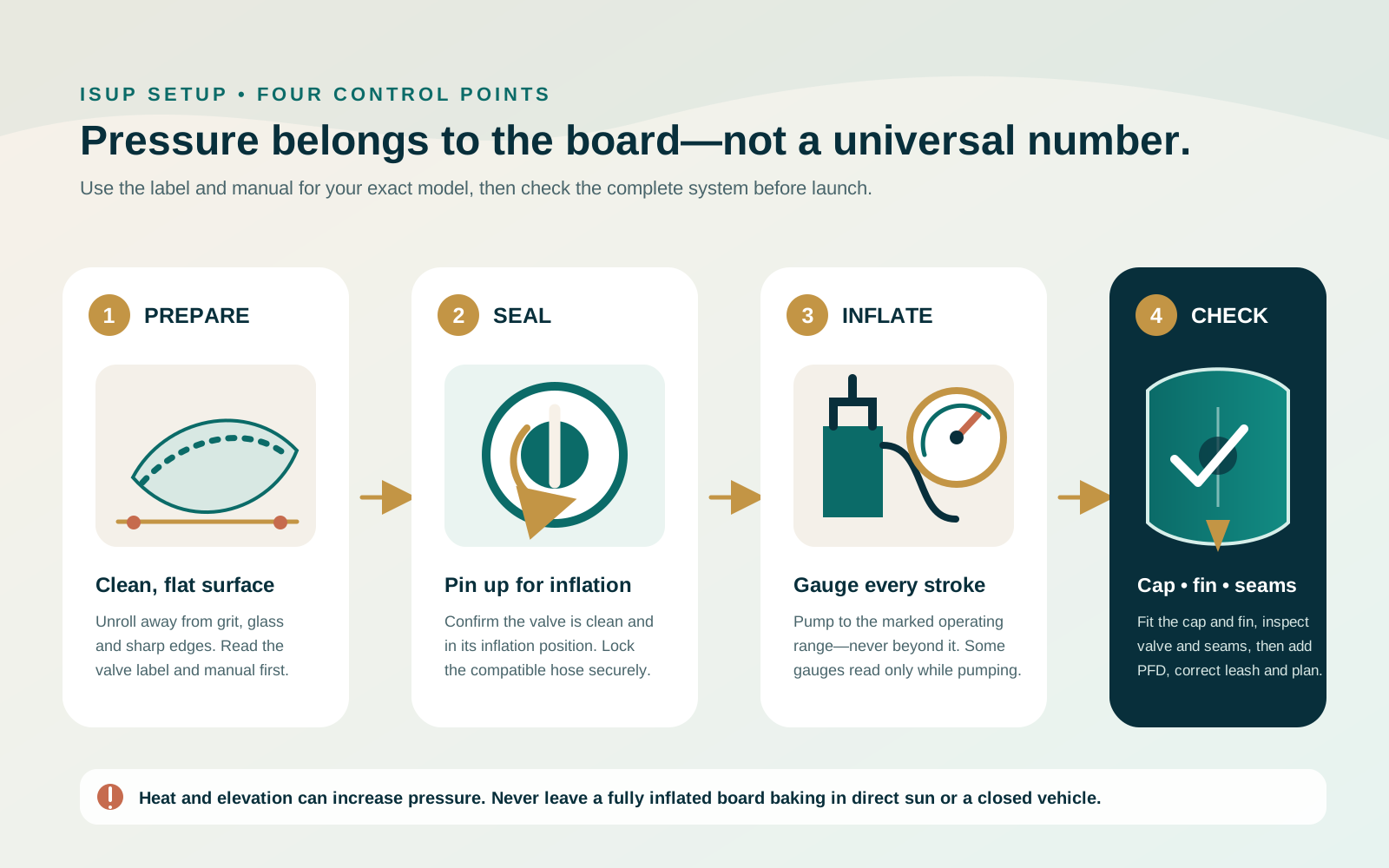
Build pressure in six deliberate steps
- 01Prepare the surface.
Unroll the board deck-up on clean, level ground away from grit, glass, sharp stones and vehicle traffic. Flatten the valve area without forcing cold, tightly folded material.
- 02Set the valve for inflation.
Remove the cap and inspect for sand or damage. On the common spring-loaded design shown by NRS and Starboard, the centre pin must be in its raised, closed position so the valve seals when the hose comes off. Follow the exact valve instructions; mechanisms vary.
- 03Lock the hose.
Seat the correct adapter squarely and twist only as directed. A crooked adapter can leak or damage the valve. Keep the pump upright and the hose free from kinks.
- 04Move volume first.
Use the high-volume or double-action mode while resistance is low. Switch to the high-pressure or single-action mode when the pump maker tells you to; forcing the wrong setting adds effort without improving control.
- 05Read pressure live.
Watch the gauge during a pumping stroke. NRS notes that some systems stop displaying when the stroke stops because the board's sealing disc closes. Finish inside the exact operating range and never exceed the marked maximum.
- 06Close and inspect.
Disconnect the hose, replace the valve cap, then fit the fin according to its system. Check the seams, valve, deck fittings, leash plug and fin retention before carrying the board to water.
A brief hiss while the adapter releases can be air from the hose rather than the board. If air continues escaping, refit the hose only when needed, check the pin position and sealing surfaces, and use the manufacturer's leak procedure. Do not put tools on a pressurized valve unless the manual expressly tells you to.
When the setup feels wrong
Diagnose the reading before adding more pressure
A gauge that sits at zero early in inflation may not be broken. Many SUP gauges begin to register only after the board has taken shape, and some read most clearly while the pump is under load. Confirm that the gauge is installed in the correct direction, the hose is sealed and the pump is in the mode described by its maker.
Board stays soft
Check hose connections, valve-pin position and the pressure reading. Do not assume softness means the board needs more than its marked limit.
Pressure falls
Let the board stabilize in shade, then follow the maker's leak test. Clean water with a small amount of soap can reveal bubbles when the manual permits it; rinse afterward.
Shape looks abnormal
A small dimple opposite some valve assemblies may be normal on specific designs. A new bulge, lifting seam or distorted rail is different: stop and seek model-specific advice.
Pressure is only one reason an inflatable can feel unstable. A missing or loose fin, loading beyond the recommended performance range, weight concentrated aft, a board chosen too narrow for the paddler, or wind and chop can all create a poor ride. Never chase a handling problem by inflating beyond the limit.
If the valve seems loose, do not reach automatically for the supplied wrench. Many makers require the board to be fully deflated before any valve-body adjustment. Follow the model's procedure or have a trained service provider inspect it.
Pressure keeps changing
The launch is not the end of pressure management
Air and materials respond to their environment. NRS warns that direct sun and an increase in elevation can lead to overinflation and damage. A board pumped in cool shade can face a different pressure after lying on a hot beach or riding in a closed vehicle. Keep it shaded, avoid leaving it fully inflated on land and recheck it as the manual directs.
- At a hot launchInflate close to departure, keep the board out of prolonged direct sun and never treat the pressure limit as a target to exceed for extra stiffness.
- During a drivePacked and protected is the simplest option. If the maker allows inflated transport, reduce pressure as instructed, secure the load properly and account for heat and elevation.
- After entering cold waterPressure may settle. Check against the maker's operating instructions rather than topping up reflexively at the shoreline.
Never leave the pump to decide alone
An electric pump needs the correct adapter, pressure capability and reliable automatic stop, but automation does not replace supervision. Stay beside it, verify the set point and stop for unusual heat, sound, movement or leakage.
Complete the water-safety setup separately: wear a correctly fitted PFD or buoyancy aid, choose a leash for the specific environment, carry communication on your body and check wind, water temperature, tide or flow. Correct pressure makes the board perform; it does not make the venue safe.
Protect the next session
Deflation is a cleaning and storage procedure
Rinse salt, silt and organic residue with fresh water when appropriate, then dry the board completely before long storage. Remove the fin and protect its box or plate from bending. Open the valve only on a clean surface and control the first rush of air so it does not blow sand into the mechanism.
- 01Release pressure.
Use the valve's specified deflation position. Keep face, loose clothing and grit away from the opening.
- 02Fold or roll as designed.
Follow the maker's direction and protect rigid fin plates. NRS advises loose rolling when unfolded storage is unavailable; another brand may specify a particular fold pattern.
- 03Store cool and dry.
Avoid direct sun, heaters, damp sheds, heavy objects and sharp bends. Keep the clean, dry pump, hose, fin, fastener and repair kit together.
Small fabric punctures may be field-repairable with the correct material and adhesive, but valve, seam and structural repairs are not generic craft projects. Observe cure times and pressure limits in the repair instructions. Quarantine a suspect board until the repair has been inspected and tested exactly as the maker requires.
The best inflation routine finishes with a board that is measured, inspected and easy to trust—not simply hard to the touch.
Primary references
Check the guidance behind the guide
Conditions, regulations, and product instructions can change. These primary resources support the safety-sensitive and technical points above; always check the latest local information before launching.
Clear answers
Frequently asked questions
01What PSI should I use for my inflatable paddle board?
Use the operating range or maximum pressure printed for your exact model and confirmed in its current manual. There is no universal SUP pressure; never exceed the marked limit.
02Why does my pump gauge show zero?
Many gauges do not register until the board has some pressure, and some read only during a pumping stroke. Check the hose, adapter, gauge orientation and pump instructions before assuming the board needs more air.
03Can I use an electric pump or air compressor?
Use only a compatible SUP pump with the correct pressure range, adapter and reliable stop, and supervise it. NRS warns against high-pressure air compressors for its boards; follow your own board's manual.
04How can I tell whether the board is firm enough?
Use the pressure gauge and the board's operating range. Hand feel varies with construction and temperature and cannot confirm a safe pressure.
05Can I leave an inflatable SUP inflated between sessions?
Only as its manufacturer allows. Keep it cool, shaded and supported, monitor pressure and never leave it fully inflated baking on a beach or in a closed vehicle. Clean and dry it before storage.