Before the water
Mistake: using a universal setup number
Inflatable boards differ. Inflate with a working gauge to the pressure printed by the manufacturer, not to a number borrowed from another board. Install the correct fin, close the valve cap and inspect seams, deck, paddle and leash attachment before launching.
Likewise, choose a board from its recommended paddler-and-gear range. Width, shape and construction influence stability; a generic volume formula or one “beginner width” cannot describe every design.
- Paddle orientation.Most offset blades work with the blade angled forward, away from the paddler; confirm the maker's markings if the shape is unfamiliar.
- Paddle length.Start adjustable, then tune on the water until the shoulders stay relaxed and the blade can be planted cleanly.
- Loose equipment.Secure only what you need without creating loops or clutter around feet and the remount area.
Quiet body, active legs
Mistake: chasing stability with stiffness
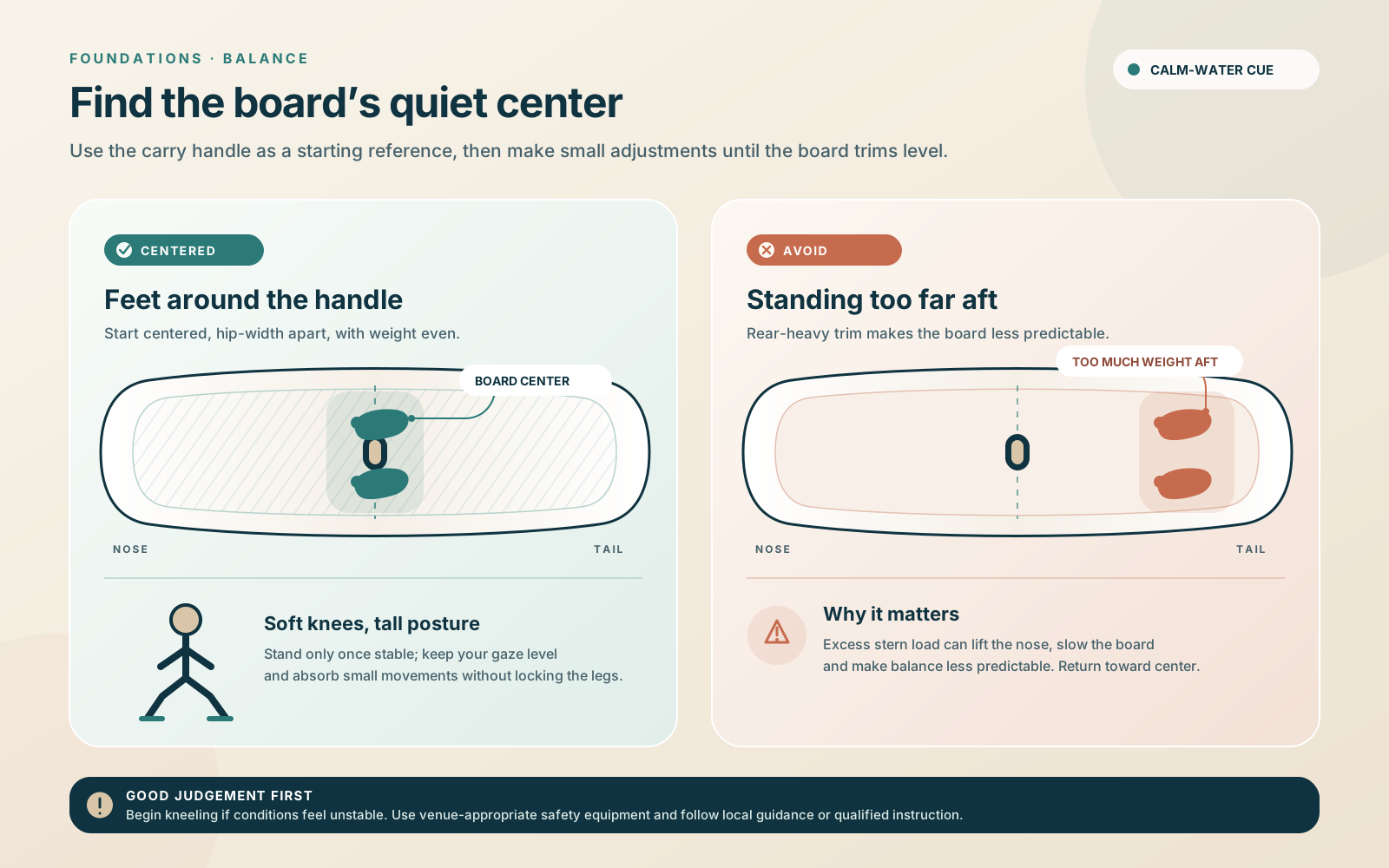
Stand around the center carry handle with feet roughly hip-width apart, toes forward and knees soft. Keep your head up and let ankles, knees and hips respond to the board. Locking every joint turns small movement into a full-body correction.
Eyes
Look toward the route and scan around you. Staring at the deck narrows awareness and often folds the body forward.
Feet
Begin parallel and centered. Move only after the neutral stance feels repeatable from both kneeling and standing.
Paddle
Keep it working. A planted blade can add a useful third point of contact while the board settles.
Less effort, cleaner water
Mistake: pulling with the arms past the feet
Reach only as far as you can keep a composed trunk and shoulders. Plant the blade fully beside the board, connect the stroke to torso rotation, then release near your feet. Continuing far behind the body tends to lift water, steer the board and load the shoulder without adding useful drive.
A clean catch and early exit beat a heroic, dragging stroke.
Several strokes on one side will naturally turn many all-round boards. Change sides when the nose begins to wander, and learn a gentle forward sweep for deliberate turning. The goal is control, not a mathematically fixed switching rhythm.
The system around the skill
Mistake: treating one leash as universal
On unobstructed flat water, a suitable leg leash helps keep the board—the largest piece of flotation—nearby after a fall. In moving or tidal water, that same leash can snag and hold a paddler in current. Seek local instruction and use an appropriate, reachable quick-release waist system where the environment calls for it.
Flotation is separate
A leash is not a PFD. Wear a correctly fitted flotation device appropriate to the venue and rules. In the United States, the Coast Guard's federal SUP carriage rule beyond narrow swimming, surfing or bathing areas is a legal minimum; state and local requirements can add to it, and wearing the PFD provides more protection than carrying it.
Carry communication on your body—not only in a bag tied to the board. Tell someone the route and return time, and dress for an unexpected swim.
Practise the recovery
Mistake: learning the remount in an emergency
Use controlled, obstruction-free water that is deep enough to avoid striking the bottom. Fall clear of the board and paddle, protect your head if needed, surface, orient yourself and return to the board. Approach the center, kick your legs to the surface and slide your chest onto the deck before rolling or climbing aboard.
Practise from both sides while close to shore and appropriately dressed. “Shallow” is not automatically safer: rocks, submerged objects and a hard bottom can turn a routine fall into an injury.
Finally, check wind direction and the whole-session forecast. Avoid offshore wind and conditions beyond your ability. Start with a short leg that does not leave a punishing return, and finish with energy in reserve.
Primary references
Check the guidance behind the guide
Conditions, regulations, and product instructions can change. These primary resources support the safety-sensitive and technical points above; always check the latest local information before launching.
Clear answers
Frequently asked questions
01How do I know whether an inflatable board has enough air?
Use a reliable gauge and the pressure range in that board's manual or label. Hand feel is not a substitute, and another brand's PSI may be wrong for yours.
02Why does my board keep turning?
Some yaw is normal. Keep the shaft more vertical, plant near the rail, exit near your feet and change sides as needed. Wind, fin setup and uneven loading can also contribute.
03Should beginners practise falling?
Yes, in controlled, obstruction-free water while wearing the right gear. Practise falling clear, locating the board and paddle, and remounting from both sides.
04How deep should practice water be?
Deep enough that a fall will not strike the bottom or submerged hazards, while still matching your swimming ability and local conditions. There is no universal waist-depth rule.
05Why are my shoulders tired after a short paddle?
The paddle may be too long, you may be shrugging at the catch, or pulling with the arms past the feet. Shorten the session, refine the fit and use torso rotation rather than forcing the stroke.
06Can a beginner paddle alone?
A lesson or capable partner adds margin. If you later go alone, stay well within ability, keep close to a safe shore, share a float plan and carry communication on your person.